
What’s New in AI Radiology After RSNA 2025: AI Re-Inventing Itself, From Point Solutions to the AI-Native Era
December 18, 2025
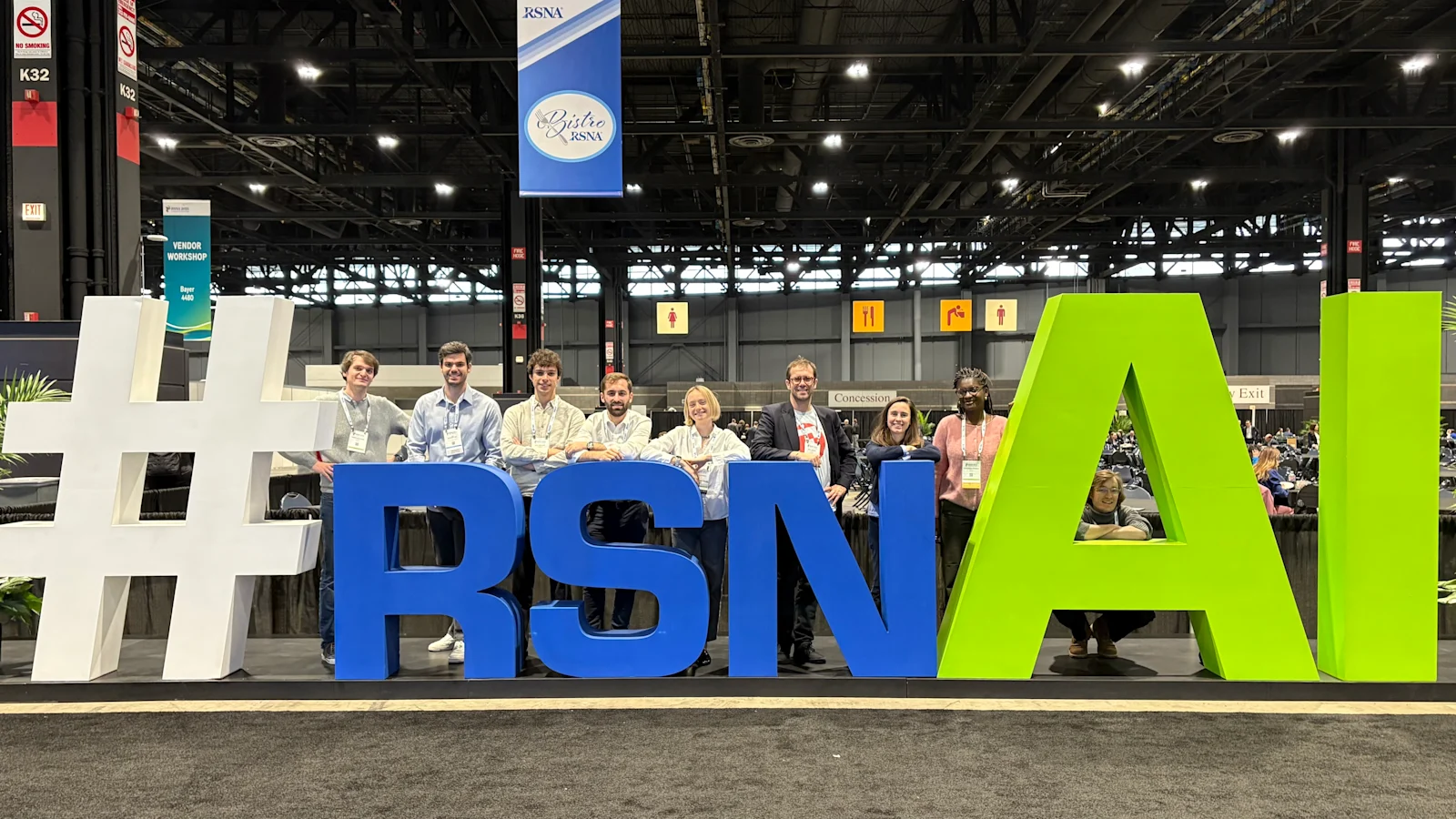
RSNA 2025, themed “Imaging the Individual,” marked a significant shift in the trajectory of medical imaging. We have moved past the era of narrow AI solutions into a cycle of consolidation and foundational infrastructure. For investors, the message was clear: the future belongs to those who control the workflow and the underlying model.
The Rise of the Foundation Model: from Research to Roadmap
The most significant AI trend of the conference was the emergence of Foundation Models—broad-spectrum AI capable of redefining the imaging ecosystem. Multi-modal and vision-language models (VLMs) have officially moved from “interesting research” into enterprise workflow roadmaps.
Multi-Modal Entrants: Companies like Meca Health are building models that consume imaging, text, and workflow data to generate next-generation reports from X-ray-based solutions.
The Connective Tissue: Actors such as HOPPR and Aidoc are positioning themselves as modality-agnostic platforms, acting as the underlying layer across the hospital.
Strategic consolidation: The market signal is loud—Radiology Partners’ Mosaic division recently acquired Cognita to integrate foundation-model capabilities directly into their platform. This confirms that the next competitive battleground is foundational AI embedded in infrastructure, not standalone point solutions.
Agentic Workflows: The New Battlefield for Productivity
If foundation models are the "brain," agentic workflows are the "hands" that finally put that intelligence to work. The industry has moved beyond fragmented point solutions; hospitals are no longer buying features, they are buying order and cohesion.
From Interpretation to Orchestration: The goal has shifted from answering a specific clinical question to managing the entire diagnostic journey.
The Challenge to Traditionals: Traditional PACS and workstation manufacturers are being challenged by this new layer of intelligence. The "battlefield" is no longer about who has the best viewer, but who controls the agent that routes data, automates segmentation, and generates audit-ready structured outputs.
The “Immaturity” Hurdle: As Dr. Paul Chang (University of Chicago) warned during the conference, we must move past the "Four Horsemen of AI Immaturity" toward “useful agents to do useful things”—shifting from autonomous hype to practical orchestration.
Raidium: The Intersection of Intelligence and Utility
At Raidium, we are positioned at the crossroads of these two critical market needs.
The model: We have developed a promptable CT/MR foundation model (trained on more than one billion images) designed to be fine-tuned to enterprise workflows—automating segmentation, enabling longitudinal tracking, and standardizing outputs.
The interface: Unlike models that remain "invisible" in the background, we provide an Ai-native standalone viewer. By putting our model directly into the radiologist's day-to-day workflow, we ensure immediate adoption and measurable ROI.
Significant moves from the Radiology AI ecosystem
2B+ USD acquisition of Intelerad by GE: Cloud is where the value is captured today
Intelerad's strategic acquisition by GE Healthcare is a significant signal from the radiology business, where the core value in today's radiology IT and software market is predominantly captured by the Enterprise PACS (Picture Archiving and Communication System). This system serves as the central hub for image storage, access, and distribution, becoming the critical infrastructure for diagnostic efficiency and clinical workflow across an entire healthcare network. This is also a way to allow the scalability of AI deployment.
Bayer & Blackford: Is the AI radiology marketplace business declining?
Pharmaceutical giant Bayer announced plans to deprioritize its investment in AI platform company Blackford Analysis as part of a general move away from the platform business. Bayer is also winding down its investment in Calantic Digital Solutions, the digital platform company it formed in 2022. This signals that, in the foundation model era, the highest value in radiology is shifting away from third-party marketplaces toward integrated, foundational AI infrastructure.
The Return of Capital
While ROI remains a discreet conversation, it is the primary driver of current funding and IPO momentum. The industry is looking for scale and lock-in, qualities found only in infrastructure that provides predictable productivity lifts. For strategic leaders and investors, securing a foundation-model partner is now a time-sensitive strategic priority to maintain a technological edge.
Want to read more of our radiology events' digest?